OnlyFans does not publish a public API for third-party price tracking, so ranking sites have to verify prices through indirect methods. That single technical gap explains why the subscription price you see on a ranking card can differ from the price on the creator’s page, and this article walks through exactly how those prices get collected, checked, and sometimes missed.
If you rely on ranking directories to compare pages before spending money, understanding the verification chain matters. A price shown as $9.99 may have been captured two weeks ago, before the creator changed it, and nothing on the card will tell you that unless the site has real correction procedures in place.
The Data Collection Problem Without an API
There is no endpoint that returns a price array, no webhook that fires when a creator edits their tiers, and no export that lists promotional status across accounts.
Instead, every ranking site builds its price database from indirect signals, each with a different accuracy profile and a different lag between reality and publication.
| Collection Method | Accuracy Level | Typical Delay |
|---|---|---|
| Manual verification | High when performed close to publication | Hours to a few days |
| Automated scraping | Medium, breaks on layout changes and gated content | Minutes to 24 hours |
| User reporting | Variable, depends on volume and validation | Days to weeks |
| Creator self-submission | High at submission time, decays afterward | Weeks, unless re-confirmed |
The consequence is structural, not accidental. Every ranking site is working with a moving target, and the only real question is how aggressively it corrects the drift.
Manual Verification Versus Automated Scraping
Manual verification means a person opens the creator’s page, checks the displayed subscription price, and records it. It is slower, but a human catches context that a script misses, such as a promotional label, a bundle option, or a free page that earns through pay-per-view instead of subscriptions.
Automated scraping scales better but stumbles on the same obstacles it faces everywhere: login walls, dynamic rendering, and pages that show different content depending on account state. A scraper that hits a gated profile may return an error and default to the last known value rather than flagging the miss.
When you evaluate a ranking site, look for five concrete accuracy indicators rather than marketing claims about freshness:
- Update frequency: does the site state how often prices are rechecked, and does that number match visible timestamp changes?
- Sample size per category: a directory verifying dozens of pages is not the same as one verifying thousands.
- Error correction protocol: is there a visible way to report a wrong price, and do reports actually change the card?
- Geographic coverage: prices can display differently across regions, so a single-country sample has limits.
- Price band testing range: the platform’s real span runs from $4.99 to $49.99 for paid base subscriptions, so a site that only ever shows $5-$10 prices is probably sampling a narrow slice.
Neither approach is inherently honest. A manual process run carelessly produces the same errors as a scraper run blindly, and the difference only shows up when you check the correction trail.
Price Change Detection and Timing Delays
Creators change prices for many reasons, and each reason interacts differently with a ranking site’s update cycle. A permanent increase propagates the next time the page is checked; a temporary promotion may be cached long after it ends.
- Promotional period caching: a $3 first-month offer gets stored as the card’s headline price and survives long after the promotion closes.
- Creator mid-cycle adjustments: a price change made between verification runs leaves the site showing the previous figure until the next pass.
- Seasonal pricing pattern misclassification: a recurring holiday discount can be logged as the standard price if the site does not track history properly.
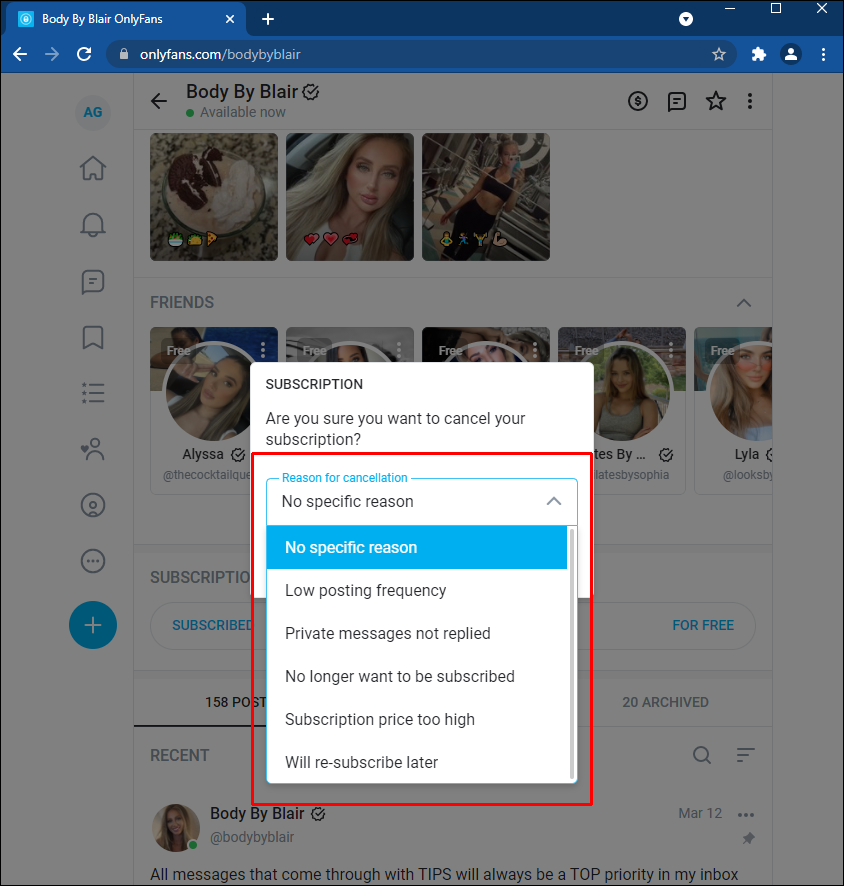
When a creator raises the price, auto-renew stops for existing subscribers, and access continues until the paid period ends.
Tip: treat any ranking card price as a snapshot with an expiry date. If the card does not show when the price was last confirmed, assume the number could be several weeks old and verify before you commit.
Delay matters most around promotional windows. A subscriber who waits for a discount that already ended wastes time; a subscriber who subscribes at full price because the card missed a live promotion pays more than necessary.
Spotting Stale Data on Ranking Cards
Ranking cards leak their own reliability problems through small inconsistencies that are easy to spot once you know what to look for.
- Missing recent activity timestamps: no “last updated” line, or a timestamp that has not moved in weeks across many cards.
- Inconsistent price histories: the card shows one figure while the profile description or older cached version shows another with no explanation.
- Unmatched promotional labels: a discount badge sits next to a price that equals the standard rate, or a “limited offer” tag persists indefinitely.
- Category mismatches: a free page listed in a paid-price column, even though free pages set the price to $0 and earn through PPV messages and tips.
- Absent creator status indicators: no marker for whether the account is active, paused, or has stopped posting.
Combined, they suggest the site is publishing without re-checking, which raises the odds that what you see is not what you will be charged.
A card that lists a price with no verification date and no correction link is a card you should treat as informational rather than authoritative.
Cross-Reference Methods for Price Confirmation
Sensible subscribers verify independently before entering payment details, because the platform itself gives you no directory to compare against. OnlyFans has no built-in discovery feed, which is precisely why ranking sites exist in the first place.
- Visit the creator’s profile directly and read the subscription button, which shows the live price at the moment of purchase.
- Check the creator’s social media announcements, where promotions and price changes are often posted before directories catch up.
- Compare two ranking sites against each other; when both agree and both carry recent timestamps, confidence rises.
- Watch for auto-renewal interruption flags, since a stopped renewal is a strong hint that the price changed recently.
The same logic applies when you hunt for creators across multiple directories. Readers who compare platforms and want to see how different aggregators handle price data often start with the best onlyfans search reddit discussions, where users post screenshots of cards that turned out to be wrong.
Cross-referencing takes a couple of minutes and prevents most surprises, particularly around the difference between a promotional first month and a standard base price.
BestOnlyFans Methodology and Transparency Standards
Verification quality varies widely across directories, and the differences show up in process design rather than advertising copy. A site that publishes prices without documenting how they were captured is asking for trust it has not earned.
| Verification Stage | Process Description | Subscriber Benefit |
|---|---|---|
| Initial price capture | Price read directly from the live subscription button rather than a cached search result | Starting figure reflects current page state, not an old snapshot |
| Tier and promotion check | Base price recorded separately from any first-month discount | You can tell a $4.99 base from a promotional $3 entry offer |
| Recheck cycle | Scheduled re-verification with timestamps attached to each card | You can judge how fresh the number is before subscribing |
| Correction handling | User reports routed to a review step before the card is edited | Errors get fixed without introducing new ones |
| Publication | Final card shows the verified figure alongside the verification date | Decision made on dated evidence instead of an undated claim |
BestOnlyFans is one example of a directory that treats the verification date as part of the listing rather than an internal detail. That single design choice changes how a subscriber reads a card, because an undated price and a dated price carry completely different weight.
The practical takeaway is to favor directories that expose their process over directories that only expose their rankings.
When Verification Fails and What Subscribers Risk
Verification failures are not abstract. They translate into specific money outcomes, and most of them are avoidable with a two-minute check before subscribing.
- Unexpected higher charges: the card showed an old, lower price and the live checkout shows the current, higher base rate within the $4.99-$49.99 range.
- Missed promotional windows: the card cached a discount that already expired, so you wait for a deal that no longer exists.
- Auto-renewal cancellation surprises: a price increase stopped your renewal without an obvious notification, and access ends at the close of the paid period.
- Budget misallocation: you plan around a $5 subscription but the real cost includes PPV unlocks up to $50 or paid chat at $3-$5 per message.
- Duplicate subscription attempts: confusion over whether a page is free or paid leads to repeat checkout attempts and card verification holds of $0.10.

Adding two-step authentication to your account does not fix a stale price, but it does protect the payment method attached to it. Security settings and price verification solve different problems, and both belong in a routine before any purchase.
The 20% platform fee also deserves attention here, because it shapes how creators price. A creator keeps 80% of every subscription, PPV unlock, and tip, which is why small price adjustments and promotional months are common tactics rather than rare events.
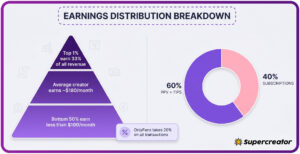
Because earnings concentrate heavily among a small share of accounts, the pages most likely to change pricing frequently are also the ones most listed on ranking sites.
FAQ
Why can’t ranking sites access OnlyFans prices directly through an API?
The platform does not publish a public pricing API for third parties, so there is no official endpoint that returns subscription prices or notifies sites when a creator edits a tier. Ranking sites therefore rely on page-level observation, which introduces delay and error into every listing.
How often should I expect ranking site prices to match what I see on OnlyFans?
There is no universal schedule. Sites that recheck frequently and publish timestamps tend to match closely, while sites that update rarely can be weeks behind.
What should I do if a ranking card price differs from the creator’s current page?
Then report the discrepancy to the directory if it offers a correction form, because unreported errors persist and mislead the next reader.
Does BestOnlyFans disclose when its price data was last verified?
A directory that attaches verification dates to its cards gives readers a way to judge freshness before subscribing. Check whether the timestamp is visible on the listing itself rather than buried in a general disclaimer, since visibility is what makes the disclosure useful.